1 Timothy 5:7
Taking care of
elderly family members
1Timothy 5:7 And these things command, that they may be blameless.
This tiny little verse, found in the first letter of Paul to Timothy, consists of only 6 words in the original Greek. Its direct meaning will therefore probably be quite straightforward. So what are these Greek words?
The verse starts with ‘kai’, which is a coordinating conjunction and usually translated as ‘and’. It will often join two similar words, or it will also frequently introduce something that is a result of what was written before. That is probably the case in our verse today.
The next Greek word is ‘tauta’, which means this, or since its in the plural here, ‘these things’. Then we get to the imperative verb in this sentence, ‘parangelle’. This comes from ‘para’ and ‘aggello’, meaning to transmit a message or to command, to instruct. Some bible translators chose command, some instruct. The point is clear, Timothy should transmit the message that some people should do some things. So the real question is, who should be doing what?
But before we answer that question, let’s look at the last little phrase. ‘hina anepilemptoi osin’. Hina before a subjunctive verb (which ‘osin’ here is) always denotes a purpose. So here we get the purpose of why some people should do something. ‘Osin’ means to be. And anepilemptoi means ‘not apprehended’, as in, there is nothing that can be brought up against the person. Thus blameless or above reproach are good translations.
So what is that some people should do in order to be blameless? The context of the letter answers the question of who Timothy should teach this message to. Its the people of the church in Ephesus. But the lessons, principles, and commands, have been valid for Christians throughout the ages, and Paul is indirectly teaching us something here.
As for the content of the instruction, that we find in the preceding verses, where Paul gives a set of detailed instructions of how families should treat widows, and how widows should put their priority in prayer as they trust God. Its likely that Paul really focusses in on how people should support widows in their family, because he continues to say in verse 8 that, if you do not provide for your family, you are worse than an unbeliever.
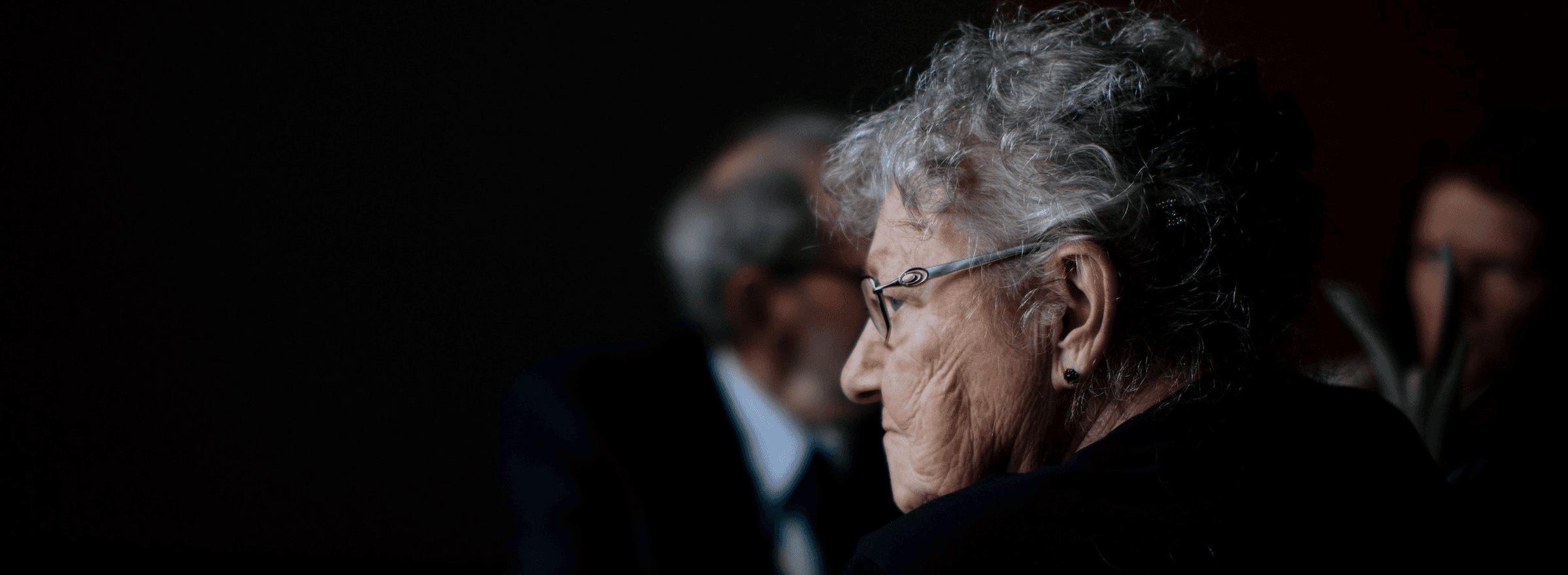
Christians should provide and support their family members. This is how children and grand-children should repay their parents (verse 4) for all that they have done for them. The fact that Jesus taught that your spiritual family has priority over your physical family (Mark 3:31-35) does not take anything away from the duty we have to repay and take care of the elderly people in our families. Even on the cross, Jesus instructed John to take care of his own mother, Mary, and John took her into his home.
It may not be a popular thing in our culture anymore to really take care of your parents when they are no longer able to take care of themselves, but its a very Christian thing to do. You will be blameless if you do, and if you teach others also.
Recent Posts
Progressive Sanctification - Introduction
Hesed and Emet - Full of Favor and Faithfulness
How AI music helped FCC Awana to increase memorization 65%
Why have a daily quiet time? Lessons from Solomon
Quiet Time color themes
Quiet Time Status and Planning Report February 2025
Using Quiet Time for Awana
Quiet Time is now on the App Store!
Day 12. Love
Day 11. Speech
Most Popular Posts
Luke 8:18 Be careful how you hear
Matthew 11:29 The Yoke of Jesus
Galatians 6:4 Examine your own work
1 Peter 4:13 Joy in Suffering
Ephesians 5:22 Wives, submit to your husbands
1 Thess 5:21 Test everything, keep what is good
Luke 11:41 Have Compassion, Show Mercy, Be Clean
Revelation 22:11- Being Dirty or Clean
Mark 13:35 Watch, for the master is coming
Mark 1:15 Good News! Our King is coming!
Subscribe
To receive our Blog Posts, please Sign Up or Log In.
Respond to this Post